When I touched the back of my ankle, I found a longitudinal straight tissue, which was called the Achilles tendon.It’s the biggest and strongest muscle in the body, and it plays a very important role in our body.The main function of this part is to cause strong sole bending when the flatfish and calf muscles contract, allowing the body to move forward while walking, and playing the most important role in running or jumping up.Because it plays an important role in moving and working out, it was used the most when exercising, putting them at risk of injury.If the Achilles tendon is damaged, normal daily life such as walking and running has become very difficult, but today I will introduce you to this rupture of the Achilles tendon.
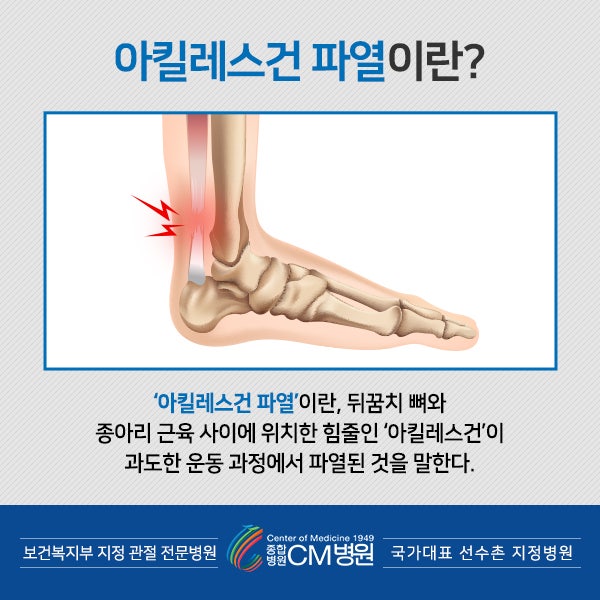
A typical injury to appear in that area was a ruptured Achilles tendon.Seventy percent of Achilles tendon injuries were ruptures, which appeared to be sports activity and chronic Achilles tendonitis, mostly indirect injuries caused by excessive force almost instantly.Most musculoskeletal-related diseases come naturally as you get older, but why do these results come out when the proportion of patients in their 40s and older was much higher?

a cause.
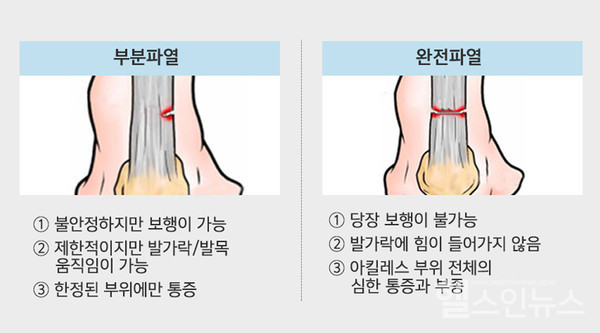
I was able to find the reason because the more active you are, the more handsome you are.High-intensity exercises that exceed the range of exercise you can do are repeated continuously, or fatigue accumulates in the area due to exercises such as running and mountain climbing.Therefore, the results showed more young patients than middle-aged people.The problem was that the Achilles tendon is a very important part of our body.Therefore, if the disease continues without recovery, the inconvenience of moving and walking increases and the quality of life decreases significantly.Then, what is the typical symptom of ruptured Achilles tendon?

a symptom [condition].
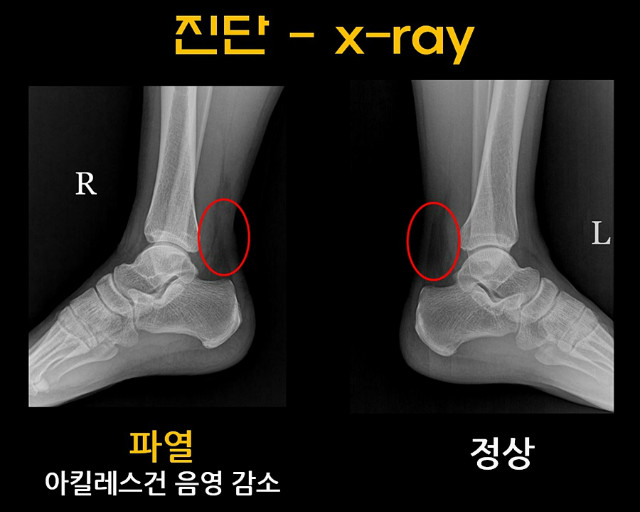
When Achilles tendon rupture occurred, symptoms such as pain, tenderness, fever, and swelling around the heel and Achilles tendon appeared.Especially when I woke up in the morning, I felt severe pain and stiff and stiff.When the Achilles tendon was damaged, it became difficult to walk normally and it also became a walking disorder.The damaged area is largely divided into the affected area of tendon, the center of tendon, and the attachment of tendon bone, but it occurred frequently at 2 to 6cm above the attachment of bone, which is vulnerable to blood distribution.If the pain occurs in that area, it is important to know exactly where and how much damage was caused, so I recommended that you visit the hospital as soon as possible.
medical treatment.

First of all, non-surgical conservative therapy is used, and in most cases, it can be completely cured.Along with sufficient rest, he helped by conducting cold compresses, nonsteroidal analgesic anti-inflammatory drugs, physical therapy, injection (PDRN), and rehabilitation exercises (massages, stretching, muscle exercises).Conservative treatments such as gypsum fixation were also applied in the event of complete damage, which is considered relatively severe, which was an improvement method for patients who could not or did not want surgery.This method had fewer complications, but there was a limit to the high risk of rupture again.If you are worried about the possibility of re-damage after receiving such conservative treatment and the rehabilitation period that needs to proceed for a long time, surgery was recommended to reduce the risk of re-burst as rehabilitation methods developed.

an operation.

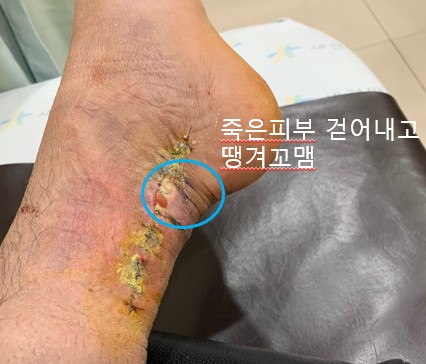
Surgical improvement was also a good option, but there should have been no metabolic disorders such as lower limb edema, skin necrosis and diabetes.On the other hand, chronic diseases sometimes required reconstruction using other people’s ligaments rather than primary sutures.Skin incision was usually made by entering the medial longitudinal segment, adding a longitudinal segment to the patenon, spreading it from side to side, cutting the part, suturing the tendon, closing the patenon and suturing the skin.There was a traditional method of fixing gypsum for six to eight weeks after surgery, and an accelerated rehabilitation method that performed rehabilitation faster by wearing an auxiliary device instead.In the case of traditional methods, long-term gypsum fixation and weight load restriction can cause muscle atrophy, complications such as joint stiffness, tendon adhesion and cardiac arrhythmia thrombosis, and negative effects such as delayed return to daily life.Therefore, I often prefer early rehabilitation these days.Today, we had a time to find out the representative symptoms of Achilles tendon rupture and how to treat them, and the most important thing for any disease was to make efforts to prevent it.It was very helpful to prevent rupture if I secured flexibility of the Achilles tendon through steady stretching.It would have been better to continue doing this before and after exercise or regardless of exercise.However, if you already have suspicious symptoms or are suffering from persistent pain, please visit the hospital as soon as possible for consultation with a specialist.Today, we had a time to find out the representative symptoms of Achilles tendon rupture and how to treat them, and the most important thing for any disease was to make efforts to prevent it.It was very helpful to prevent rupture if I secured flexibility of the Achilles tendon through steady stretching.It would have been better to continue doing this before and after exercise or regardless of exercise.However, if you already have suspicious symptoms or are suffering from persistent pain, please visit the hospital as soon as possible for consultation with a specialist.Previous Image Next ImagePrevious Image Next Image